Slip and Fall Doctor in Pasadena, TX
Injured in a slip and fall at a grocery store, restaurant, apartment complex, or business in Pasadena? See a doctor today and pay nothing out of pocket. We treat slip and fall injuries on a Letter of Protection - which means you get immediate medical care and we bill your settlement later. Property owners are legally responsible for maintaining safe premises. When they fail, victims suffer broken bones, head injuries, and spinal trauma. Don't let businesses or their insurance companies minimize your injuries. Our doctors specialize in documenting the hidden damage from falls that insurance adjusters try to deny. We work with personal injury attorneys who handle premises liability cases worth $50,000 to $500,000+.

Slip and Fall Injuries We Treat in Pasadena
Slip and fall accidents cause serious injuries that insurance companies systematically undervalue. Adjusters claim "you just fell down" as if gravity doesn't cause devastating trauma when a 150-200 pound human body strikes concrete, tile, or asphalt.
The biomechanics of falling are brutal. When you slip, your feet go forward while your body goes backward. You have zero time to brace for impact. Your head, spine, hips, and tailbone absorb forces designed to shatter bone and tear soft tissue.
Our slip and fall doctors document every injury with precision. Property owners spend $20,000+ on defense experts claiming injuries are "pre-existing" or "not that bad."
Hip Fractures
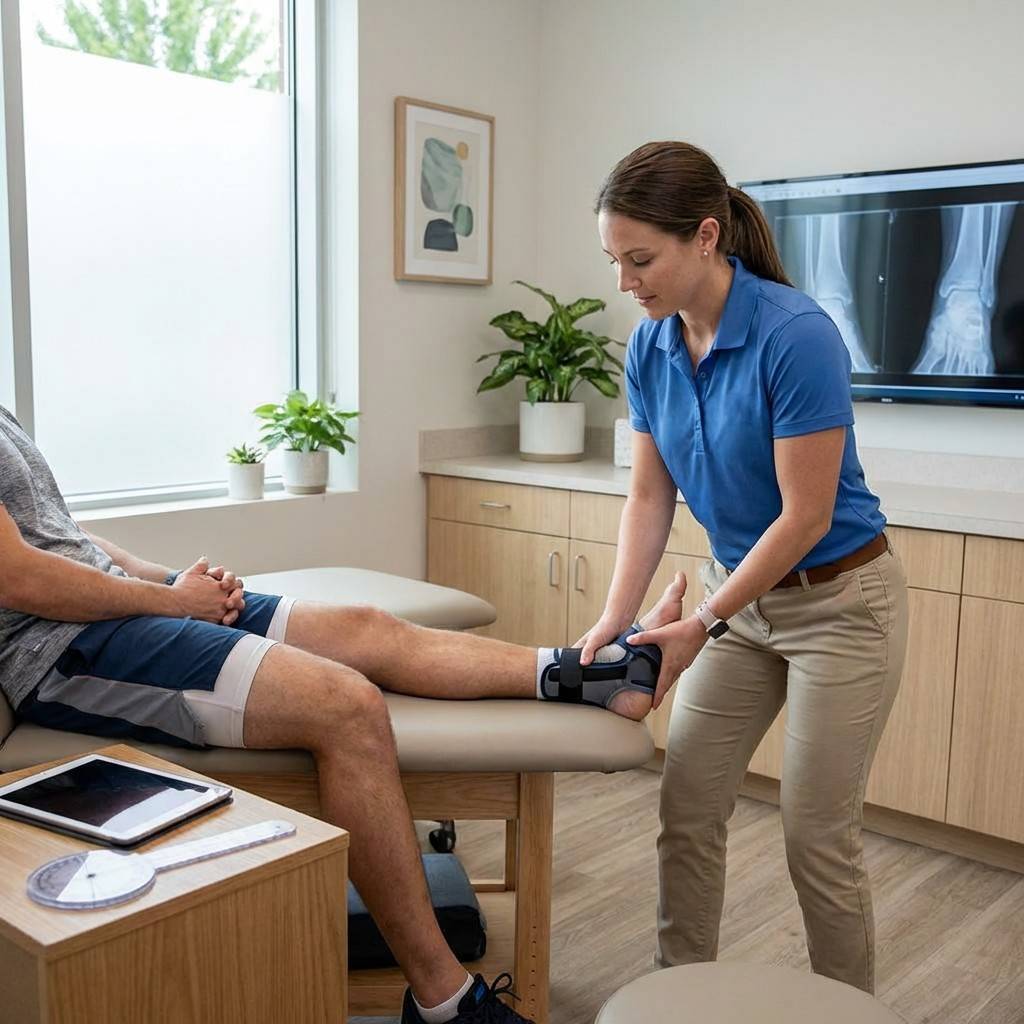
Most common serious slip and fall injury in adults over 50. Falling sideways or backward onto hip causes femoral neck fractures or intertrochanteric fractures. Requires emergency surgery with pins, plates, or total hip replacement. Recovery takes 6-12 months. Many victims never regain full mobility. High mortality rate in elderly patients (20% die within one year post-fracture).
Traumatic Brain Injury and Concussions
When head strikes floor during backward fall. Skull fractures, subdural hematomas, brain contusions, diffuse axonal injury. Symptoms: loss of consciousness, confusion, memory loss, headaches lasting weeks, dizziness, sensitivity to light/noise. Severe TBI causes permanent cognitive impairment, personality changes, seizure disorders. Mild TBI (concussion) still causes months of debilitating symptoms affecting work and daily life.
Spinal Fractures and Compression Injuries
Vertebral compression fractures when landing on buttocks or back. T11, T12, L1, L2 most vulnerable. Osteoporotic patients at highest risk. Causes severe back pain, height loss, kyphosis (hunched posture). May require vertebroplasty or kyphoplasty surgery. Risk of spinal cord compression if bone fragments displaced.
Wrist and Arm Fractures
Victims instinctively extend arms to break fall. Results in distal radius fractures (Colles' fracture), ulnar fractures, scaphoid fractures. Requires casting for 6-8 weeks or surgical repair with plates/screws. Risk of permanent stiffness, arthritis, carpal tunnel syndrome. Dominant hand injuries affect employment for manual laborers, office workers, healthcare professionals.
Shoulder Injuries
Rotator cuff tears, labral tears, shoulder dislocations, proximal humerus fractures. Falling on outstretched arm or direct shoulder impact. Often requires arthroscopic surgery or open rotator cuff repair. Recovery 6-12 months. Permanent loss of range of motion common. Affects ability to lift, reach overhead, perform work duties.
Knee Injuries
Patellar fractures, ACL/MCL/meniscus tears, tibial plateau fractures. Occurs when knee twists during fall or strikes hard surface. Requires MRI diagnosis. Many cases need arthroscopic surgery or ACL reconstruction. Recovery 4-9 months with extensive physical therapy. Permanent instability, early-onset arthritis common complications.
Tailbone Fractures (Coccyx Fractures)
Excruciatingly painful. Occurs when falling backward onto buttocks. Difficult to treat - no cast possible. Healing takes 8-12 weeks of sitting restrictions. Victims cannot sit comfortably for months. Affects employment for drivers, office workers, anyone with desk job. Chronic pain persists in 30% of cases.
Back and Neck Injuries
Herniated discs, spinal ligament sprains, muscle strains, facet joint injuries. Falling backward causes hyperextension. Falling forward causes hyperflexion. Both mechanisms damage cervical and lumbar spine. Symptoms: radiating pain into arms/legs, numbness, weakness, chronic pain. May require epidural injections, physical therapy, or surgery.
Facial Injuries and Dental Trauma
When face strikes floor during forward fall. Broken nose, orbital fractures, jaw fractures, knocked-out teeth, facial lacerations requiring stitches. May need maxillofacial surgery, dental implants, reconstructive procedures. Permanent scarring, facial disfigurement. Psychological impact affects social interactions, employment in customer-facing roles.
Internal Injuries
Blunt force trauma to abdomen or chest. Rib fractures, liver contusions, splenic injuries, kidney trauma. Victims may feel "okay" initially then develop internal bleeding hours later. Requires CT scan to diagnose. Can be life-threatening if not detected early.
Why Immediate Medical Attention Matters
Slip and fall injuries have delayed symptom onset. Adrenaline masks pain for 24-48 hours. Brain injuries, internal bleeding, and fractures may not cause symptoms immediately but worsen without treatment.
From legal standpoint: Insurance companies use treatment delays against you. "If you were really hurt, you would have seen a doctor immediately." Any gap beyond 48 hours gives adjusters ammunition to deny claims.
Emergency room evaluation + follow-up with slip and fall specialist within 48 hours = strongest medical-legal position.
What to Do After a Slip and Fall Accident in Pasadena, TX
The first 48 hours determine whether you recover and receive fair compensation. Property owners and their insurance companies activate crisis teams designed to minimize liability and blame you for falling.
Report the Fall to Property Owner/Manager Immediately
If you fall at a business: Tell the manager. Request they fill out incident report. Get a copy. Take photos of incident report if they won't give you a copy. If you fall at apartment complex: Contact leasing office. Report hazard. Get incident number. Critical: Property owners often deny falls occurred or claim hazard was "fixed immediately after." If it's not documented, it didn't happen legally.
Document the Hazard Before It's Removed
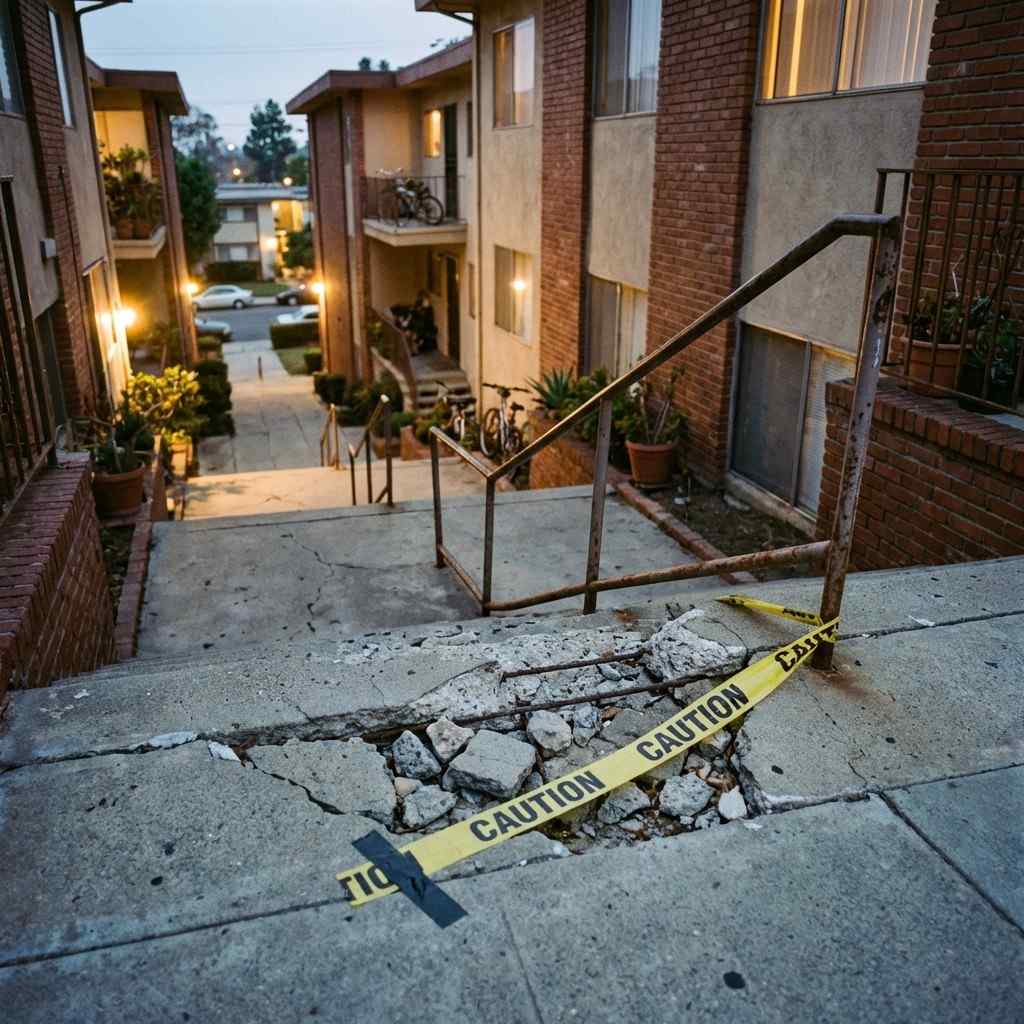
Property owners remove evidence within hours. Take photos immediately: The hazard that caused fall (wet floor, broken stairs, uneven pavement, debris), lack of warning signs (no "Wet Floor" sign, no caution tape), lighting conditions (dark stairwells, broken lights), your injuries (bruises, cuts, swelling), your clothing (shoes showing they had adequate tread), and surrounding area (360-degree photos). If unable to photograph (too injured), have witness do it or ask property owner to preserve surveillance video.
Get Witness Information
Other customers, employees, or bystanders who saw fall. Get names and phone numbers. Witnesses disappear within hours. Employees fear retaliation from employers and change stories.
Seek Medical Attention Within 24 Hours
Even if you "feel okay." Fractures, concussions, and internal injuries may not be apparent immediately. Go to ER or urgent care, then follow up with us within 48 hours. Do NOT sign medical release forms given by property owner's insurance company. They're trying to access your entire medical history to find pre-existing conditions to blame.
Contact Personal Injury Attorney
Do NOT talk to property owner's insurance adjuster. They will call within 24-48 hours offering "quick settlement" of $2,000-$5,000. This is a trap to close case cheap. Your injuries may be worth $50,000-$300,000+. We refer to attorneys who specialize in premises liability law. They know how to prove property owner negligence and maximize compensation.

Evidence disappears fast.
Take photos immediately.
Common Mistakes That Destroy Slip and Fall Claims
Slip and Fall Treatment with No Insurance - Letter of Protection
Slip and fall victims face a financial dilemma: serious injuries requiring $10,000-$100,000+ in medical treatment, but no ability to pay upfront. Health insurance often has high deductibles ($3,000-$7,000) that victims can't afford.
Letter of Protection solves this problem by allowing immediate access to medical care while your attorney pursues the property owner for compensation.
What is a Letter of Protection for Slip and Fall Cases?
A Letter of Protection (LOP) is a three-way agreement between you (the patient), your personal injury attorney, and medical providers. Your attorney issues a written guarantee that medical bills will be paid from settlement proceeds.
This means:
- You receive all medically necessary treatment immediately
- No upfront payment, no monthly bills, no collections calls
- Medical providers agree to wait for payment until case settles
- Bills are paid from settlement before you receive your portion
For slip and fall cases, LOP typically covers:
- Orthopedic surgery (hip fractures, wrist fractures)
- Diagnostic imaging (X-rays, MRI, CT scans)
- Physical therapy (12-24 sessions)
- Chiropractic care for back/neck injuries
- Pain management (epidural injections, medication)
- Neurologist consultations (concussion, TBI evaluation)
- Dental work (knocked-out teeth, jaw fractures)
Total bills typically reach $15,000-$150,000 depending on injury severity.
Who Qualifies for Letter of Protection in Slip and Fall Cases?
You qualify if:
You may NOT qualify if:
We evaluate every case individually. Even if comparative negligence applies (you were partially at fault), Texas law allows recovery reduced by your fault percentage.
How the Letter of Protection Process Works for Slip and Fall
You contact us immediately after fall
Schedule evaluation within 24-48 hours. No payment required for initial consultation.
We perform comprehensive injury assessment
Full examination, review of ER records if applicable, diagnostic imaging coordination, specialist referrals as needed.
We refer you to premises liability attorney if needed
We work with law firms experienced in slip and fall cases against major property owners (Walmart, Kroger, HEB, apartment complexes, restaurants, retail stores).
Your attorney investigates liability
Attorneys obtain: Incident reports from property owner, surveillance video (must request within days before deleted), maintenance records (when was floor last cleaned? when was broken stair reported?), employee statements, property inspection history, prior incidents (has anyone else fallen in same location?).
Attorney evaluates case value
Slip and fall settlements depend on: Severity of injuries (broken bones vs. soft tissue), property owner's degree of negligence (knew about hazard vs. should have known), comparative fault (were you distracted on phone? wearing inappropriate shoes?), permanent disability resulting from fall, insurance policy limits ($100,000 to $1 million+ for commercial properties).
If case is strong, attorney issues Letter of Protection
This legal document guarantees payment from settlement. We accept LOP and begin treatment immediately.
You receive months of coordinated medical care
Treatment continues until Maximum Medical Improvement (MMI) - the point where further treatment won't significantly improve condition. This may take 3-12 months for serious injuries.
We create comprehensive medical documentation package
Court-ready reports detailing: Mechanism of injury (biomechanics of fall), every injury diagnosed with supporting imaging, causation statements linking injuries to fall, treatment chronology, permanency ratings if applicable, future medical needs.
Case settles or goes to trial
Most slip and fall cases settle for $20,000 to $300,000 before trial. If property owner refuses fair settlement, case goes to jury trial where verdicts can reach $500,000 to $2 million+ for severe injuries.
Medical bills paid from settlement
Settlement funds distributed: Attorney contingency fee (33-40%), medical liens paid in full, remaining funds to you.
What if My Slip and Fall Case Doesn't Settle?
This happens in approximately 10-15% of cases due to:
- Comparative negligence (jury finds you more than 50% at fault - Texas bar to recovery)
- Lack of evidence (no incident report, no photos, no witnesses)
- "Open and obvious" hazard defense (property owner argues you should have seen danger)
If case is dismissed or lost at trial and you receive no settlement:
- We negotiate payment plans based on income
- We reduce bills substantially (50-70% discount common)
- In some cases, we forgive portions of debt
You're not bankrupted by medical bills. We took on financial risk by accepting LOP.
Letter of Protection Success Rate for Slip and Fall
In our experience, 85-90% of slip and fall LOP cases we accept result in settlements sufficient to cover medical bills plus compensation for the patient.
Why lower success rate than car accidents? Slip and fall cases face higher comparative negligence risks. Juries sometimes blame victims for "not watching where they were walking." But when liability is clear (wet floor with no warning sign, broken stairs owner knew about, inadequate lighting), settlements are substantial.
$3,000-$15,000
Unrepresented victim settlement (property owners take advantage)
$30,000-$300,000+
Represented victim with full medical documentation (fair compensation for serious injuries)
The medical documentation we provide is the difference between a nuisance settlement and life-changing compensation.
Common Slip and Fall Locations in Pasadena, TX
Pasadena's mix of retail stores, restaurants, apartment complexes, and industrial facilities creates thousands of slip and fall hazards. Our clinic is located on Woodlawn Ave, serving fall victims from every commercial district in Harris County.
Common fall locations: Grocery stores (HEB, Kroger, Walmart, Fiesta), restaurants (fast food, sit-down dining), retail stores (Target, Home Depot, shopping centers), apartment complexes (stairs, parking lots, pools), gas stations and convenience stores, industrial facilities and warehouses, and public sidewalks (broken concrete, tree roots).
Property owners have legal duty to maintain safe premises and warn of hazards. When they fail, victims suffer serious injuries.
Grocery Store Slip and Fall Accidents
What causes falls: Spilled liquids (water, juice, milk, cleaning solutions) not cleaned immediately, produce dropped on floor (grapes, lettuce create slip hazards), wet floors from cleaning without warning signs, leaking refrigerator units creating ice patches, freshly mopped floors with inadequate barriers, torn floor mats creating trip hazards.
Where falls occur: Produce section (dropped fruit/vegetables, misting systems create wet floors), meat/seafood department (ice, blood, cleaning fluids), frozen food aisles (leaking freezers create ice), dairy section (spilled milk, leaking containers), checkout lanes (spills not cleaned between customers).
Typical Injuries
Key Legal Point
Store owners claim: "Spill just happened - we didn't have time to clean it" or "Customer should have seen hazard" or "Customer was distracted on phone." But Texas premises liability law requires stores to conduct regular floor inspections (every 15-30 minutes in high-traffic areas). If spill existed longer than inspection interval, store is liable.
Compensation Ranges
Minor injuries (bruises, sprains): $5,000-$25,000. Moderate injuries (fractures requiring casting): $30,000-$100,000. Severe injuries (surgery, permanent disability): $100,000-$500,000+. Major grocery chains (HEB, Kroger, Walmart) carry $1-5 million liability policies. They settle to avoid bad publicity.
Proving Liability
Proving liability requires: Incident report from store, surveillance video showing how long hazard existed, witness statements, store's inspection log records, employee deposition testimony. Attorneys subpoena these records. Stores often "lose" surveillance video or claim cameras "weren't working." This is spoliation of evidence - punishable by sanctions.
Documentation Requirements
We document: Mechanism of injury (slipped vs. tripped, direction of fall), impact location (head, hip, wrist, back), all injuries with diagnostic imaging proof, photos of torn clothing (proves fall force), witness statements about hazard condition. Your attorney obtains store records showing prior incidents in same location, maintenance logs, employee training records, and corporate safety policies.
Restaurant Slip and Fall Accidents
What causes falls: Kitchen grease tracked onto dining area floors, spilled drinks not cleaned promptly, wet floors from rain (customers tracking in water), bathroom floors wet from sinks/toilets, uneven flooring transitions, poor lighting in dining areas, outdoor patio hazards (broken tiles, uneven surfaces).
Where falls occur: Entryway (wet floors from rain, no floor mats), dining area (spilled food/drinks), bathrooms (wet floors, no grab bars), kitchen areas (grease, water, food debris), outdoor seating (cracked pavement, uneven surfaces).
Typical Injuries
Key Legal Point
Restaurant owners claim "spill just occurred" or "floor was dry when we last checked." But health code regulations require restaurants to maintain sanitary, hazard-free premises at all times. High-traffic areas (entryways, bathrooms) must be inspected every 10-15 minutes. Failure to do so is negligence per se.
Compensation Ranges
Minor injuries: $5,000-$20,000. Moderate injuries: $25,000-$75,000. Severe injuries: $100,000-$300,000. Chain restaurants (McDonald's, Chili's, Olive Garden) settle faster than independent restaurants due to corporate insurance policies.
Proving Liability
Proving liability requires: Incident report, surveillance footage, health inspection records, employee training records on spill cleanup protocols, floor maintenance logs. Many small restaurants lack surveillance cameras. This makes witness testimony critical.
Documentation Requirements
We document injury patterns consistent with slip-and-fall mechanism. Photos of victim's shoes (proving adequate tread). Photos of clothing (grease stains prove floor was greasy). Attorneys depose restaurant employees about: When floor was last mopped, whether "Wet Floor" signs were used, how long spill existed before fall, whether manager was notified of hazard.
Apartment Complex Slip and Fall Accidents
What causes falls: Broken or uneven stairs, missing/loose handrails, inadequate lighting in stairwells, cracked or uneven pavement in parking lots, slippery pool decks, wet floors in common areas (laundry rooms, mailrooms), lack of ice/snow removal (rare in Pasadena but occurs).
Where falls occur: Exterior stairs (broken concrete, missing handrails), parking lots (potholes, uneven asphalt), breezeway areas (poor lighting), pool areas (slippery tiles, no warning signs), laundry rooms (water leaks from machines).
Typical Injuries
Key Legal Point
Property management companies claim: "Tenant should have seen hazard," "Hazard was reported and we were planning to fix it," or "Tenant was drunk or careless." But Texas law requires landlords to maintain common areas in safe condition. If hazard existed for more than 24-48 hours, landlord had "actual or constructive knowledge" and is liable.
Compensation Ranges
Minor injuries: $10,000-$30,000. Moderate injuries (fractures): $40,000-$150,000. Severe injuries (TBI, spinal cord damage): $200,000-$1 million+. Large apartment complexes carry $500,000 to $2 million liability policies.
Proving Liability
Proving liability requires: Written maintenance requests showing tenant reported hazard, photos of hazard (preferably timestamped), incident report filed with property management, lease agreement showing landlord's maintenance responsibilities, city code violations (unsafe stairs, inadequate lighting). Attorneys send preservation letters to prevent property management from "fixing" hazard and destroying evidence.
Documentation Requirements
We document mechanism (fall down stairs vs. trip on uneven pavement). Photos of fall location showing hazard condition. Witness statements from other tenants who knew about hazard. Attorneys obtain: Maintenance records (when was hazard reported? when was repair scheduled?), property inspection reports, prior incidents (other tenants injured at same location?), insurance claim history.
Retail Store Slip and Fall Accidents
What causes falls: Wet floors from spills or cleaning, merchandise left in aisles creating trip hazards, torn carpeting or floor mats, electrical cords across walkways, poor lighting, broken tiles or flooring transitions.
Where falls occur: Walmart, Target, Home Depot aisles, shopping mall walkways, dressing rooms, restrooms, checkout areas.
Typical Injuries
Key Legal Point
Store owners blame "distracted customers" or claim hazard was "open and obvious." But Texas law says property owners must keep premises reasonably safe regardless of customer attention level. If hazard wasn't apparent to reasonable person exercising ordinary care, store is liable.
Compensation Ranges
Minor: $5,000-$25,000. Moderate: $30,000-$100,000. Severe: $150,000-$500,000. Major retailers (Walmart, Target, Home Depot) settle most legitimate claims to avoid litigation costs.
Proving Liability
Proving liability requires: Incident report, surveillance video, floor inspection logs, employee interviews, store policies on spill cleanup timeframes. National retail chains have sophisticated surveillance systems. Attorney must request video preservation within 48-72 hours before automatic deletion.
Documentation Requirements
We document injury severity with X-rays, MRI, clinical findings. Photos of torn clothing. Photos showing how hazard was not "open and obvious" (poor lighting, hidden by merchandise display).
Parking Lot and Sidewalk Falls
What causes falls: Potholes and uneven pavement, cracked or broken concrete, tree roots lifting sidewalk sections, standing water (drainage problems), inadequate lighting, ice (rare in Pasadena but occurs).
Where falls occur: Shopping center parking lots, apartment complex parking areas, business district sidewalks, public parks and trails.
Typical Injuries
Key Legal Point
Property owners claim "pothole was obvious" or "victim should have watched where walking." But Texas law says hazards must be reasonably apparent. If pothole is: Hidden by shadows/poor lighting, filled with water (concealing depth), or in unexpected location (middle of walkway) - then it's not "open and obvious" and property owner is liable.
Compensation Ranges
Minor (sprains): $5,000-$15,000. Moderate (fractures): $20,000-$75,000. Severe (hip fracture requiring surgery): $100,000-$300,000.
Proving Liability
Proving liability requires: Photos of hazard (measure depth/width), witness statements, property maintenance records, prior complaints about same hazard, municipal records (if public sidewalk). If fall occurred on public sidewalk, city may be liable. But governmental immunity applies - must follow strict notice requirements.
Documentation Requirements
We document ankle/knee injuries with X-ray and MRI. Photos of victim's shoes showing adequate tread. Measurements of pothole/crack dimensions.
Government Properties and Public Spaces
What causes falls: Broken stairs at government buildings, uneven pavement on public sidewalks, inadequate lighting in public parks, wet floors in government offices, poorly maintained trails and walkways.
Where falls occur: City halls, public libraries, post offices, parks and recreation areas, public schools, courthouses.
Typical Injuries
Key Legal Point
Governmental immunity applies but Texas Tort Claims Act waives immunity for premises liability. Key requirements: Written notice to government within 6 months, damages capped at $250,000 per person, must prove government had actual or constructive knowledge of hazard. Higher burden of proof than private property cases.
Compensation Ranges
Capped at $250,000 per person for state/local government. Federal government claims (FTCA) have different caps. Despite caps, these cases are worth pursuing for serious injuries.
Proving Liability
Proving liability requires: Government maintenance records, prior complaint logs, inspection reports, work orders showing deferred maintenance, photographs with timestamps, witness statements. Government entities often claim "discretionary function immunity" - attorneys must overcome this defense.
Documentation Requirements
Same comprehensive documentation as private property falls, plus emphasis on prior notice to government, duration hazard existed, government's failure to act despite knowledge.
Photograph Everything
Hazards get "fixed" quickly after you leave.
What to Expect at Your First Slip and Fall Doctor Appointment
Your first visit typically takes 45-60 minutes. We're documenting premises liability evidence, injury causation, and damages worth tens to hundreds of thousands of dollars.
Intake and Fall Details (10 minutes)
You'll complete paperwork covering: Demographic information, detailed fall description (exact date, time, location - which store/address), fall mechanics (What caused slip/trip? Which direction did you fall? What body parts hit ground first?), property condition (Was hazard visible? Any warning signs present? Lighting adequate? Weather conditions if outdoor?), immediate aftermath (Did you report to property owner/manager? Incident report filed? Witness names obtained? Paramedics called? ER visit?), current symptoms (Pain levels, mobility limitations, how fall affects daily life).
Doctor's Note: Our doctor will ask detailed questions: Had you been in that location before? (familiarity matters for "open and obvious" defense), What were you doing immediately before fall? (reaching for item, looking at phone, walking normally), What type of shoes were you wearing? (important for defense claims), Did anyone help you up? What did they say?, Did property owner acknowledge hazard or make excuses? These details establish liability and prove you were exercising reasonable care.
Physical Examination (15 minutes)
Comprehensive evaluation including: Neurological examination if head struck ground (cranial nerves, cognitive function, balance testing), spine evaluation (range of motion, tenderness to palpation, orthopedic tests), extremity examination focusing on injury sites (wrist, hip, knee, ankle stability and function), gait analysis (how you walk reveals hidden injuries), bruise documentation with measurements and photos (bruise patterns prove fall direction and impact force).
Doctor's Note: Everything documented. Pain rated 0-10. Range of motion measured in degrees. Visible injuries photographed with ruler for scale. Objective findings can't be disputed by insurance adjusters.
Diagnostic Imaging (15 minutes)
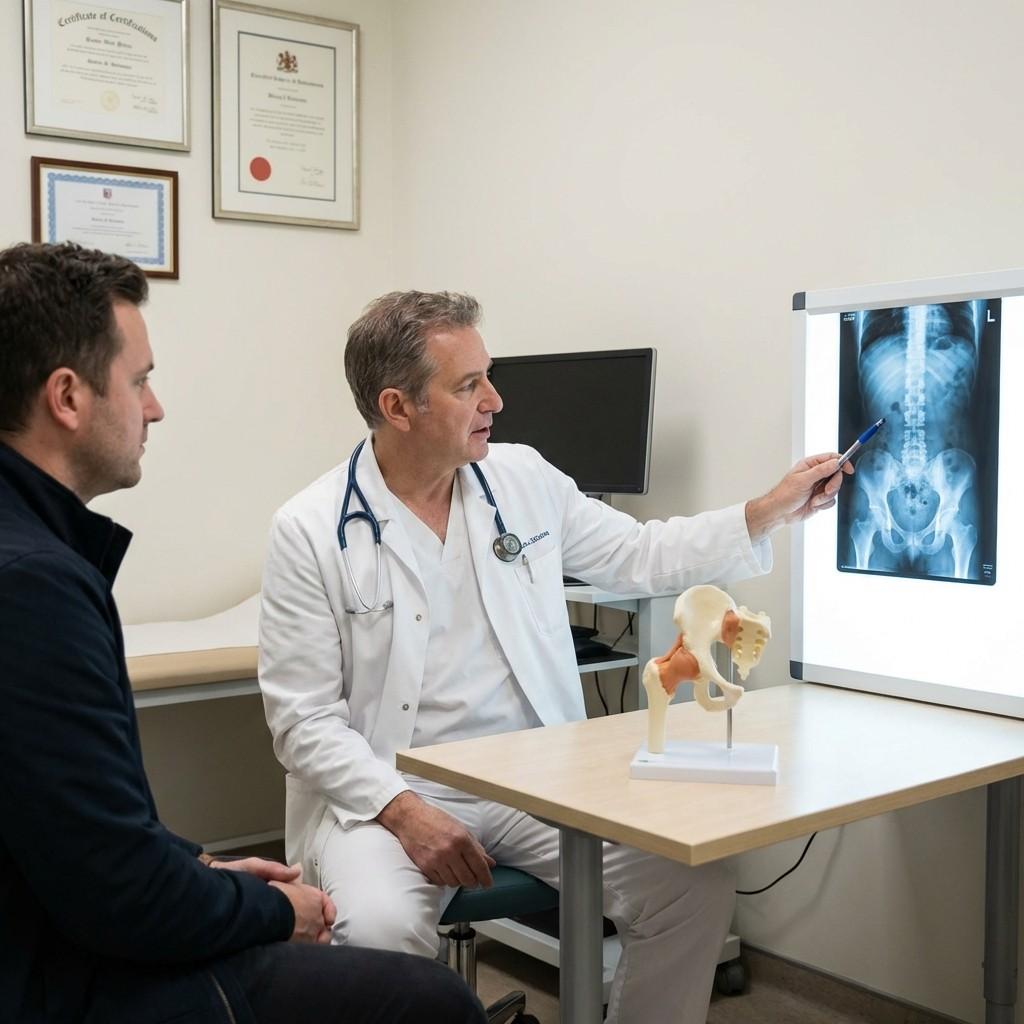
We perform digital X-rays on-site immediately to rule out fractures. If soft tissue injury (disc herniation, ligament tear) or TBI suspected, we schedule MRI/CT scan at nearby facility within 24-48 hours. (MRI is critical for high-value cases - X-rays often miss serious injuries).
Doctor's Note: We compare findings to "age-appropriate norms" to prove injuries are acute (recent) vs. chronic (pre-existing). This defeats the "degenerative condition" defense.
Treatment Plan & referrals (10 minutes)
We create a customized recovery plan: Physical therapy protocols, medication management (non-narcotic pain relief, anti-inflammatories), orthopedic specialist referrals (if surgery needed), neurologist referrals (for concussions). We explain the Letter of Protection process (no bill to you).
Doctor's Note: We coordinate everything. You focus on healing. We send all records directly to your attorney.
What to Bring to Your First Appointment
- Photo ID and Health Insurance Card (if applicable)
- Incident Report (if you have it)
- Photos of scene and injuries
- Shoes you were wearing when you fell
- List of current medications
- Any ER discharge papers or X-ray discs
Don't have everything? Come anyway. Treatment delay hurts your claim more than missing documents.
Cost: $0 if on Letter of Protection. Standard copay if using health insurance.
Detailed Evaluation
We find injuries ERs miss.
How Slip and Fall Doctors Document Injuries to Maximize Settlement Value
Property owners don't pay hundreds of thousands in settlements out of generosity. They pay because medical documentation proves: (1) Serious injuries occurred, (2) Property owner's negligence caused injuries, (3) Treatment was medically necessary, and (4) Permanent disabilities resulted.
Generic medical records lose slip and fall cases. Forensic-level documentation wins them.
Mechanism of Injury (Fall Biomechanics)
"Patient slipped on unmarked wet floor in grocery store produce section. Feet went forward, body fell backward. Patient's head struck ceramic tile floor with significant force (estimated impact velocity 12-15 mph based on fall height of 5'6"). No ability to brace for impact. This fall mechanism caused: Occipital skull impact (back of head struck floor), whiplash-type cervical hyperextension, compression loading to lumbar spine and coccyx (tailbone), impact trauma to left hip. Force of impact consistent with patient's reported symptoms and diagnostic imaging findings showing acute traumatic injury pattern."
This level of detail proves causation. Generic descriptions like "patient fell" give insurance adjusters room to claim injuries were "pre-existing."
Clinical Findings (Objective Evidence)
Weak documentation: "Patient reports back pain after fall." Strong documentation: "Lumbar range of motion severely restricted: Flexion 30° (normal 60°), extension 10° (normal 25°), lateral flexion 15° bilaterally (normal 25°). Positive straight leg raise test at 40° reproducing radiating pain into left lower extremity consistent with L5-S1 nerve root irritation. Moderate muscle spasm palpable in bilateral lumbar paraspinal muscles. Tenderness to palpation over L4-L5 spinous processes. Patient unable to sit for more than 10 minutes without severe pain - affects employment as administrative assistant."
Insurance companies can't dispute measurements, orthopedic test results, and functional limitations.
Diagnostic Imaging That Proves Acute Injury
Biggest defense in slip and fall cases: "Injuries are degenerative, not caused by fall." We defeat this with comparative imaging: "MRI lumbar spine reveals: L4-L5 disc herniation with 5mm posterior protrusion, moderate central canal stenosis, acute edema (fluid signal) in surrounding soft tissues indicating recent trauma, no evidence of chronic degenerative changes typically seen with age-related disc disease. Radiologist interpretation: Findings consistent with acute traumatic disc herniation, not chronic degenerative disc disease. Clinical correlation: Patient had zero back pain or limitations prior to fall. Symptoms began immediately post-fall. Acute edema on MRI proves recent injury. This disc herniation was directly caused by compression forces during fall, not pre-existing degeneration."
This eliminates "pre-existing condition" defense.
Comparative Medical History
We document patient's pre-fall health: "Patient's medical records review shows: No prior spine injuries or complaints, no prior treatment for back pain, no prior imaging of lumbar spine, normal physical activity level (walks 3 miles daily, plays with grandchildren, no mobility limitations), independent in all activities of daily living. Post-fall status: Cannot walk more than 100 feet without pain, cannot pick up grandchildren, cannot sit through movie or dinner, requires assistance with housework, unable to perform job duties. This dramatic functional decline immediately following fall proves causation."
Defense can't argue "patient always had these problems."
Treatment Necessity Documentation
Property owner insurance claims "patient received excessive treatment." We preempt this: "Patient continues to exhibit positive clinical signs of L4-L5 radiculopathy at week 8 post-injury. Straight leg raise test remains positive bilaterally. Lower extremity strength testing shows 4/5 strength in left anterior tibialis and extensor hallucis longus (normal 5/5) indicating ongoing nerve compression. Conservative treatment plan: Continue physical therapy 3x/week for 4 additional weeks to strengthen core musculature, improve spinal stability, and reduce nerve irritation. If symptoms do not improve, refer to orthopedic surgeon for epidural steroid injection or possible surgical consultation. Treatment is medically necessary to: Reduce nerve compression and prevent permanent nerve damage, restore functional mobility, return patient to employment (currently on medical leave), avoid surgical intervention if possible. All treatment is reasonable, customary, and medically necessary per accepted medical standards."
Every appointment justified. Defense can't claim "unnecessary care."
Permanency Ratings and Future Medical Needs
Texas premises liability law allows compensation for permanent impairment and future medical costs. We provide: Permanency Rating: "Patient has reached maximum medical improvement at 6 months post-injury with 10% permanent partial impairment to lumbar spine per AMA Guides to the Evaluation of Permanent Impairment, 6th Edition. Permanent restrictions: No lifting over 25 lbs, no repetitive bending/twisting, no prolonged standing (max 30 minutes), no prolonged sitting (max 45 minutes). These restrictions are permanent and will affect patient's ability to work and perform activities of daily living for remainder of life." Future Medical Costs: "$85,000 to $120,000 over patient's remaining life expectancy (35 years) including: Annual pain management visits ($2,500/year), prescription anti-inflammatory medication ($1,200/year), epidural steroid injections every 18-24 months ($4,000 per procedure), physical therapy for flare-ups ($3,000 every 2-3 years), possible future lumbar fusion surgery if conservative treatment fails ($60,000-$80,000)."
These numbers go directly into settlement demand calculations.
Causation Statements That Withstand Legal Scrutiny
"Within a reasonable degree of medical certainty, all injuries documented in this report were directly and proximately caused by the slip and fall incident on [date] at [location]. The mechanism of injury (backward fall onto hard tile floor) is entirely consistent with documented injury pattern (occipital skull impact, cervical hyperextension, lumbar compression, hip contusion). Patient had no prior history of these injuries. Symptom onset was immediate following fall. Acute findings on diagnostic imaging confirm recent traumatic etiology. No alternative medical explanation exists for patient's injuries."
This language meets Texas legal standards for expert medical testimony and prevents insurance companies from arguing "not caused by fall."
Rebutting "Pre-Existing Condition" Defense
Insurance companies always look for prior injuries to blame. We address this head-on: "Patient does have documented history of mild osteoarthritis in hands (diagnosed 2019). However, this condition is completely unrelated to current lumbar spine injury. Patient had zero lower back complaints prior to slip and fall. MRI shows acute traumatic disc herniation with edema, not chronic arthritic changes. Fall aggravated no pre-existing spinal condition because none existed." If patient does have prior back problems: "Patient had mild chronic lower back pain controlled with occasional ibuprofen use prior to fall. Fall caused acute exacerbation and NEW disc herniation. Pre-fall MRI (2023) showed no disc herniations. Post-fall MRI (2025) shows L4-L5 disc herniation with acute edema. This is a new traumatic injury superimposed on mild pre-existing degenerative changes. Patient's symptoms increased 500% post-fall. Pre-fall functional limitations: 5%. Post-fall functional limitations: 50%. Fall caused substantial worsening of condition qualifying as compensable injury under Texas law."
Texas follows "eggshell plaintiff" rule - you take victim as you find them. Pre-existing fragility doesn't reduce liability.

"If it isn't documented,
it didn't happen."
The Difference Between Weak and Strong Documentation
Weak Documentation (Loses Case)
"55-year-old female fell in grocery store. Complains of hip pain. X-ray shows no fracture. Diagnosis: Hip contusion. Treatment: Rest, ice, over-the-counter pain medication. Follow up as needed."
Insurance Offer: $2,000
Strong Documentation (Wins Case)
"55-year-old administrative assistant slipped on unmarked wet floor in produce section. Backward fall, left hip struck tile floor. Hip contusion with extensive bruising (10cm x 12cm measured and photographed). MRI shows traumatic bursitis and Grade 2 gluteus medius muscle strain. Patient unable to sit at desk for more than 15 minutes without severe pain - currently on medical leave from employment. 6 weeks physical therapy required. Permanency rating: 5% lower extremity impairment. Future medical costs for chronic bursitis flare-ups: $15,000 over 30 years. Causation: Within reasonable medical certainty, injuries directly caused by slip and fall on defendant's premises."
Insurance Offer: $35,000-$65,000
Same fall. Same injury. Different documentation. $33,000-$63,000 difference.
That's why property owners fear our medical reports.
Slip and Fall Doctor Serving Pasadena & Harris County
Our Pasadena clinic on Woodlawn Ave serves slip and fall victims from every commercial district in Harris County. We understand Pasadena's unique premises liability risks:
Grocery store falls at HEB, Kroger, Walmart, Fiesta in Pasadena shopping centers. Restaurant falls along Spencer Highway and Fairmont Parkway dining corridors. Apartment complex falls throughout South Houston, Deer Park, and Pasadena residential areas. Retail store falls at Pasadena Town Square and Bay Area shopping districts. Parking lot falls at industrial facilities serving Houston Ship Channel.
We've treated fall victims from hundreds of property locations. We know the local property owners, their insurance carriers, and the adjusters who handle slip and fall claims in this region. If your fall happened anywhere in Southeast Texas, we can see you today. No insurance required. No upfront payment.
Areas We Serve: Pasadena | Deer Park | South Houston | La Porte | Baytown | Pearland | Friendswood | League City | Webster | Seabrook | Galena Park | Channelview | All of Harris County
Areas We Serve
Beltway 8
High Traffic
Highway 225
Industrial Area
Fairmont Pkwy
Commercial Zone
Slip and Fall Doctor FAQ - Pasadena, TX
Within 24-48 hours maximum. Many slip and fall injuries have delayed symptoms: Concussions may not cause symptoms for 6-24 hours, internal bleeding develops gradually, fractures (especially hip fractures in elderly) may not be immediately apparent due to adrenaline, and soft tissue swelling and stiffness peak 24-72 hours post-fall. From a legal standpoint, insurance companies use treatment delays against you. Any gap beyond 72 hours gives adjusters ammunition to argue "injury wasn't serious" or "not caused by fall." If you went to ER immediately after fall: Excellent. Still see us for comprehensive follow-up within 48 hours. ERs treat acute life-threats but miss many injuries (ligament tears, mild concussions, soft tissue damage). If you didn't go to ER: See us immediately. We'll determine if imaging or specialist referrals needed.
Property owners always blame victims. But Texas premises liability law says: Property owners must maintain reasonably safe conditions, property owners must warn of hidden hazards, and property owners must conduct regular inspections. Even if you were "distracted," property owner is still liable if: Hazard was not "open and obvious," no warning signs were posted, and hazard existed long enough that reasonable inspection would have found it. Texas follows "comparative negligence" - even if you're partially at fault, you can still recover compensation reduced by your fault percentage. Example: Jury finds property owner 70% at fault, you 30% at fault. Total damages $100,000. You receive $70,000. Your personal injury attorney will gather evidence proving property owner's negligence outweighs any comparative fault on your part.
Depends on injury severity, permanency, property owner's negligence degree, and your comparative fault. Minor injuries (sprains, bruises, no fractures): $3,000-$15,000. Moderate injuries (fractures requiring casting, concussions, herniated discs): $20,000-$100,000. Severe injuries (fractures requiring surgery, TBI, permanent disabilities): $100,000-$500,000+. Catastrophic injuries (spinal cord damage, severe TBI, death): $500,000-$2 million+. Factors that increase value: Clear liability (unmarked wet floor, broken stairs reported multiple times), permanent impairment, high medical bills, lost wages (cannot work during recovery), elderly or disabled victim (more susceptible to serious injury), and property owner had prior incidents in same location (proves knowledge of hazard). Factors that decrease value: Comparative fault (you were distracted, wearing inappropriate shoes), "open and obvious" hazard (large pothole in daylight), minor injuries with full recovery, and pre-existing conditions that defense can blame. Can't value case without medical evaluation. See us first, then attorney will provide case value estimate.
Probably not. About 80-85% of slip and fall cases settle before trial. Property owners settle to avoid: Litigation costs ($20,000-$50,000 in attorney fees and expert witness fees), jury trials (Harris County juries are unpredictable - verdicts can be much higher than settlement offers), and bad publicity (nobody wants news headline "Walmart Refuses to Pay Injured Grandmother"). If case goes to trial: Your attorney prepares you thoroughly. You testify about how fall happened, your injuries, how injuries affect your life. Trial typically lasts 2-4 days. Verdict comes within hours. Most trials result in higher verdicts than settlement offers. But trials have risks - you could lose and get nothing. Your attorney will advise whether settlement offer is fair or whether going to trial likely to produce better outcome.
Yes, but governmental immunity complicates matters. If you fell on city/county property: Texas Tort Claims Act waives immunity for "premises defects," you must provide written notice to city within 6 months of fall, damages capped at $250,000 per person ($500,000 per incident), and city has 90 days to investigate before you can file lawsuit. Proving city liability requires: City had "actual knowledge" of defect (prior complaints, work orders) OR defect existed long enough that reasonable inspection should have found it, and city failed to repair or warn of hazard. Attorneys obtain city maintenance records, complaint logs, and inspection reports. If city contractor caused hazard (construction company left debris, utility company dug hole and didn't properly mark), you can sue contractor directly - no immunity applies.
All commercial properties are required by mortgage lenders to carry liability insurance. Minimum coverage typically $500,000 to $1 million. If business truly has no insurance (illegal operations, bankrupt companies): You can sue business owner personally, you can place liens on business property, and you may recover partial settlement from business assets. But uninsured defendants are rare. Your attorney will verify insurance coverage through: Certificate of insurance requests, corporate records search, and property deed research (mortgage documents list insurance requirements). If business has no insurance, your attorney may pursue other defendants: Property owner (if business is tenant, landlord may be liable), maintenance company (if responsible for floor cleaning, stair repairs), and manufacturer (if defective flooring or equipment caused fall).
Still have questions?
Call Now: (346) 560-7001Other Accident Injury Services We Offer
We offer comprehensive care for all types of accident injuries
Work Injuries
Specialized workplace injury treatment with documentation for workers' compensation claims. We handle all injury types from lifting injuries to industrial accidents.
Car Accidents
Specialized treatment for car accident injuries including whiplash, back pain, and soft tissue damage. Same-day appointments with no upfront costs.
Truck Accidents
Expert care for commercial truck and 18-wheeler accident victims. We understand the severe injuries caused by large vehicle collisions.
Schedule a Same-Day Slip and Fall Evaluation in Pasadena
Injured in a slip and fall at a store, restaurant, or apartment complex? Don't wait. Property owners remove evidence within hours and insurance adjusters use treatment delays against you. See a doctor today and pay $0 out of pocket with Letter of Protection. We provide same-day appointments for slip and fall victims throughout Pasadena and Harris County. Our medical documentation has helped attorneys secure $20,000 to $300,000+ settlements for clients with serious injuries.