10 Most Dangerous Intersections in Pasadena, TX (2024 Data)
Last Tuesday at 7:15 AM, a Honda Accord was T-boned by an 18-wheeler at the intersection of Highway 225 and Red Bluff Road.
This was the third serious accident at that intersection in 30 days.
Pasadena sits at the crossroads of three major trucking corridors: Highway 225, Beltway 8, and I-45. Over 10,000 semi-trucks travel these routes daily. We analyzed crash data to find the 10 spots where you're most likely to be hit.
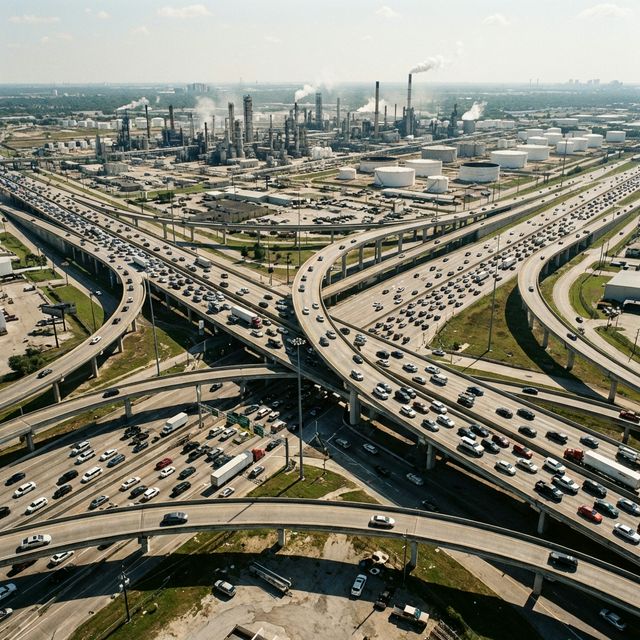
The Top 3 Most Dangerous Spots
Highway 225 at Red Bluff Road
Annual Crashes: 120+ (Estimated)
Why it's deadly: Highway traffic decelerating rapidly for the exit meets turning traffic. No protected left turn from Red Bluff means drivers gamble with gaps in 60mph traffic.
Beltway 8 at Fairmont Parkway
Annual Crashes: 100+
Why it's deadly: Multi-vehicle pileups during rush hour. Elevated tollway means hydroplaning vehicles can hit barriers and even fall to surface streets.
Highway 225 at Spencer Highway
Annual Crashes: 85+
Why it's deadly: Confusing mix of industrial truck traffic and retail shoppers. Last-second lane changes for turn lanes cause sideswipes.
Dangerous Locations #4 - #10
Beltway 8 at Southmore Avenue
Annual Crashes: 75+ | Primary Hazard: Blind-spot truck accidents
Why it's dangerous: This is a major entrance/exit point for warehouses and distribution centers. 18-wheelers merge onto Beltway 8 from Southmore Avenue without adequate acceleration lanes. Passenger vehicles get crushed between merging trucks and existing Beltway traffic.
Common accident pattern: Truck merging from Southmore doesn't see passenger vehicle in blind spot, sideswipes or pushes vehicle into barrier. Alternatively, truck slows to merge, causing vehicle behind to rear-end trailer.
Deadly factor: Underride collisions. When a passenger vehicle slides under a truck trailer during a sideswipe, the trailer decapitates the car's roof, killing front-seat occupants.
If you must use this intersection: Never drive beside a truck in this area. If you see a truck merging, slow down and let them in. Stay in the right lane only if prepared to stop suddenly.
I-45 at Pasadena Freeway (SH 225) Interchange
Annual Crashes: 70+ | Primary Hazard: Merge zone collisions
Why it's dangerous: This interchange funnels I-45 northbound/southbound traffic into Highway 225 east/west traffic. Five lanes of vehicles traveling 65+ mph must navigate complex merge patterns in less than 1,000 feet.
Common accident pattern: Driver in far left lane realizes they need Highway 225 exit (right side), cuts across 4 lanes of traffic in 500 feet, causes multi-vehicle pileup. GPS navigation systems direct drivers to "exit right in 0.2 miles" with insufficient warning.
Deadly factor: Concrete barriers on both sides mean no escape routes. Once a collision starts, vehicles ricochet between barriers creating secondary and tertiary impacts.
If you must use this interchange: Know your exit in advance (don't rely on GPS last-minute warnings). Get in the proper lane 1 mile before the interchange. If you miss your exit, take the next exit and turn around — never attempt a 4-lane cut across.
Spencer Highway at Strawberry Road
Annual Crashes: 65+ | Primary Hazard: Red-light running and left-turn collisions
Why it's dangerous: Spencer Highway is Pasadena's main retail corridor. Drivers are distracted by shopping centers, restaurants, and billboards. Traffic lights have short cycles creating pressure to "beat the yellow."
Common accident pattern: Eastbound Spencer Highway driver accelerates through yellow light at 50+ mph, light turns red, northbound Strawberry Road driver (who has green) enters intersection and gets T-boned on driver's side.
Deadly factor: Side-impact crashes at 50 mph have a 50% fatality rate. Passenger vehicles offer minimal side-impact protection.
If you must use this intersection: Treat every yellow light as red (don't accelerate to beat it). Wait 2 seconds after light turns green before entering. Look left before proceeding even with a green light.
Highway 225 at Richey Street
Annual Crashes: 60+ | Primary Hazard: Rear-end collisions at toll plaza
Why it's dangerous: This is the eastern entrance to the Highway 225 toll section. Drivers accustomed to the free highway suddenly encounter a toll plaza requiring rapid deceleration from 65 mph to 15 mph.
Common accident pattern: Driver focused on finding correct toll lane (TxTag vs. cash) doesn't notice traffic stopped ahead, rear-ends vehicle at full highway speed. Chain-reaction pileups involving 5-10 vehicles are common during rush hour.
Deadly factor: Commercial trucks with heavy loads cannot stop in time. When an 80,000-lb truck rear-ends a stopped passenger vehicle at 60+ mph, occupants rarely survive.
If you must use this intersection: Begin slowing at the "Toll Plaza 1 Mile" sign. Reduce to 40 mph at "Toll Plaza 0.5 Mile." Choose your toll lane early — don't make last-second lane changes. Check your mirror constantly for trucks approaching too fast.
Beltway 8 at I-610 Loop Interchange (East)
Annual Crashes: 55+ | Primary Hazard: High-speed merge collisions
Why it's dangerous: This is the primary connection between Beltway 8's industrial traffic and I-610's commercial traffic. Short merge lanes force vehicles to accelerate from 0 to 70 mph in less than 300 feet while merging into 70+ mph traffic.
Common accident pattern: Driver merging from I-610 onto Beltway 8 runs out of merge lane, forced to either stop (creating rear-end collision risk) or merge unsafely (causing sideswipe collision).
Deadly factor: No shoulders on either side of the merge zone. Disabled vehicles have nowhere to go, creating obstacles in active traffic lanes.
If you must use this interchange: Accelerate aggressively to match traffic speed before the merge ends. Use the entire merge lane (don't merge early). If unable to merge safely, stop at end of merge lane and wait for a large gap — don't force your way in.
Highway 146 at Battleground Road
Annual Crashes: 50+ | Primary Hazard: Rural highway/urban intersection mismatch
Why it's dangerous: Highway 146 transitions from a 70 mph rural highway to a 45 mph urban arterial with a sudden traffic light at Battleground Road. Drivers don't slow in time.
Common accident pattern: Northbound Highway 146 driver traveling 70 mph doesn't notice the traffic light ahead, realizes too late, slams brakes, rear-ends stopped vehicle or runs red light and T-bones cross traffic.
Deadly factor: No advance warning signs. The first indication of a traffic light is when you're 200 feet away traveling 70 mph (requires 400+ feet to stop safely).
If you must use this intersection: Slow to 50 mph when you see the "Battleground Road 1 Mile" sign. Assume the light will be red. If approaching at 60+ mph and the light turns yellow, stop — don't attempt to beat it.
Red Bluff Road at Pasadena Boulevard
Annual Crashes: 45+ | Primary Hazard: T-bone collisions and drunk driving
Why it's dangerous: This intersection is surrounded by bars, restaurants, and nightclubs. Between 10 PM and 2 AM Friday-Sunday, drunk driving rates spike. Also serves as a shortcut for refinery workers avoiding Highway 225 traffic.
Common accident pattern: Drunk driver runs red light on Red Bluff Road at 50+ mph, T-bones cross traffic on Pasadena Boulevard. Also common: tired refinery worker falls asleep at the wheel after a 12-hour shift, drifts through red light.
Deadly factor: No red-light cameras. No police enforcement. Drivers know they won't get caught running a red light, so risky behavior increases.
If you must use this intersection: Avoid between 10 PM – 3 AM on weekends (peak drunk driving hours). Treat green lights as "proceed with extreme caution." Look both ways even with a green light. Assume oncoming drivers will run the red.
Why Are These Intersections So Dangerous?
1. Industrial Truck Traffic + Pasenger Vehicles
Physics doesn't lie: When an 80,000-lb truck hits a 4,000-lb car, the car loses. Pasadena's economy relies on these trucks, meaning you are constantly sharing the road with massive machinery.
2. Shift Change Gridlock
Refineries operate on 12-hour shifts. At 6 AM and 6 PM, thousands of tired workers flood the roads simultaneously, creating density that exceeds the road design capacity.
3. Poor Infrastructure Design
Many of these roads were built in the 1970s. Reviewing the crash data shows short merge lanes and lack of protected left turns are major contributors to the crash rate.
4. Distracted Driving
Pasadena drivers are navigating complex industrial routes, watching for truck hazards, looking for turn lanes, following GPS directions, drinking coffee, and talking on phones. Result: Eyes not on the road, collision imminent.
What to Do If You're Injured at One of These Intersections
- Stay at the Scene: Leaving is a crime. Move to safety if possible, but do not leave.
- Call 911: Police reports are critical for determining fault, especially in "he-said-she-said" intersection disputes.
- Document Everything: Take photos of the intersection, traffic lights, skid marks, and vehicle position.
- Seek Medical Attention Within 24 Hrs: Adrenaline masks pain. Insurance companies will use any delay against you.
- Contact an Attorney: Before giving a recorded statement to insurance.
These Intersections Account for 30% of Our Patients
Our clinic is located near Strawberry Road and Spencer Highway—less than 2 miles from 6 of the top 10 danger zones. We treat accident victims from these locations daily:
- ✅ Rear-end collisions from Hwy 225 toll plaza
- ✅ T-bone crashes from Red Bluff runners
- ✅ Truck sideswipes from Beltway 8 merges
- ✅ Catastrophic I-45 interchange pileups
5 Safety Tips to Survive
- 1.
Treat Every Green Light as "Proceed with Caution": Don't assume green = safe. Wait 2 seconds after light turns green. Look left-right-left before entering. At least 3 of these intersections have chronic red-light running problems.
- 2.
Never Trust a Yellow Light: If the light turns yellow and you're more than 100 feet away, stop. Don't accelerate to beat the red. This single behavior change could prevent 30% of intersection crashes in Pasadena.
- 3.
Give Trucks Extra Space: Never drive beside an 18-wheeler. Either pass them quickly or stay far behind (4+ seconds following distance). If a truck is merging, slow down and let them in — your car will always lose.
- 4.
Know Your Route in Advance: Last-minute lane changes cause 40% of intersection accidents. Know which lane you need 1 mile before your turn. If you miss your exit, take the next one — never cut across multiple lanes.
- 5.
Avoid Peak Danger Times:
- 6:00-7:30 AM (refinery shift change + morning commute)
- 5:30-7:00 PM (refinery shift change + evening commute)
- 10:00 PM-2:00 AM Friday/Saturday (drunk driving peak)
If possible, adjust your schedule to avoid these windows.
The Bottom Line: These Intersections Won't Get Safer
TxDOT has no budget for major intersection redesigns. Pasadena's industrial economy ensures truck traffic will only increase. Population growth means more passenger vehicles competing for the same road space.
These intersections will cause 600+ crashes this year.
Drive defensively. Assume other drivers will make mistakes. And if you are injured at one of these intersections, get medical attention immediately — before insurance companies use delays to deny your claim.
Injured at One of These Intersections?
We treat accident victims from these specific locations daily. We know the traffic patterns and how liability is contested here.
Get same-day medical documentation to protect your claim.
Stop worrying about the "gap in care." Let us fix it.
We document your injury properly to explain any treatment delays to insurance. $0 out of pocket. Same-day appointments.